-
Research at NVIDIA: AI Reconstructs Photos with Realistic Results
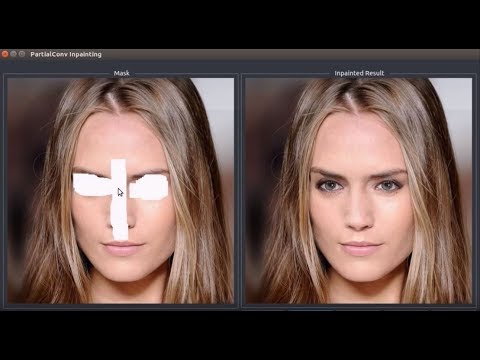
Researchers from NVIDIA, led by Guilin Liu, introduced a state-of-the-art deep learning method that can edit images or reconstruct a corrupted image, one that has holes or is missing pixels. The method can also be used to edit images by removing content and filling in the resulting holes. Learn more about their research paper “Image Inpainting for Irregular Holes Using Partial Convolutions”: https://nvda.ws/2K1G243
published: 23 Apr 2018
-
Using photos in research
Raúl discusses the use of photographs in his research about a new time, place, or person.
published: 19 Aug 2013
-
NVIDIA Instant NeRF: NVIDIA Research Turns 2D Photos Into 3D Scenes in the Blink of an AI
When the first instant photo was taken 75 years ago with a Polaroid camera, it was groundbreaking to rapidly capture the 3D world in a realistic 2D image. Today, AI researchers are working on the opposite: turning a collection of still images into a digital 3D scene in a matter of seconds with the implementation of neural radiance fields (NeRFs).
Learn more about Instant NeRFs: https://nvda.ws/3AU5wgA
Tutorial on how to make a 3D render from 2D photos: https://nvda.ws/3ciMLJI
Find the code on GitHub: https://github.com/NVlabs/instant-ngp
More Instant NeRF creators: https://blogs.nvidia.com/blog/2022/08...
For business inquiries, please visit our website and submit the form on NVIDIA Research Licensing: https://www.nvidia.com/en-us/research/inquiries/
Join the NVIDIA Developer Program: ...
published: 25 Mar 2022
-
Research at NVIDIA: AI Can Now Fix Your Grainy Photos by Only Looking at Grainy Photos
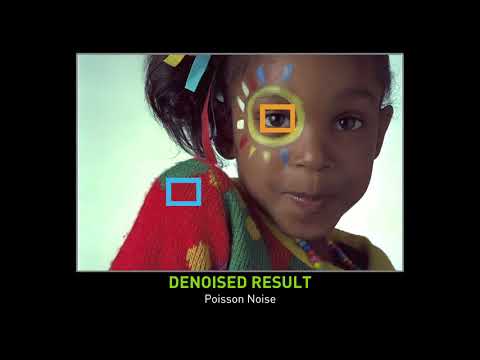
Researchers from NVIDIA, Aalto University, and MIT developed a deep learning based method that can fix photos by simply looking at examples of corrupted photos only.
Learn more: https://nvda.ws/2J8WHB7
published: 10 Jul 2018
-
How Photos Enhance Genealogical Research
Photographs are an important resource in genealogical research. They add faces to the names in your family tree and teach you about how your ancestors lived. In this webinar, you can learn about the value of photos in discovering and preserving your family history connecting to the past and present and sharing your story.
----------------------------------------------------------
Subscribe to our YouTube channel: https://www.youtube.com/myheritage
Like our Facebook page: https://www.facebook.com/myheritage
Follow us on Twitter: https://twitter.com/myheritage
Instagram: https://www.instagram.com/myheritage_official
MyHeritage blog: https://blog.myheritage.com
-----------------------------
published: 31 Oct 2019
-
UB Research: Why Some Women Share Lots of Photos on Facebook
A study of Facebook behavior by University at Buffalo researcher Michael Stefanone and colleagues found that women who base their self worth on appearance are more likely to share photos on the social networking site. Read more about the study here:
http://www.buffalo.edu/news/12339
published: 04 Mar 2011
-
50 Research Photos
published: 12 Oct 2015
-
Photos: Winners of the 2022 U of S Images of Research Photo and Imaging Competition
Through images with simple descriptions, Saskatchewan researchers captured how their work has made a difference to society, the economy, other research or global challenges.
published: 06 Apr 2022
-
Captivating Historic Old Photos of People and Places Vol 102
📸 Explore the pages of history with "Historic Chronicles," a captivating collection of old photos featuring people and places. Subscribe for a nostalgic journey through time, discovering the rich stories embedded in these vintage images! 🌟🎥
Welcome to the Time Then channel, where you can find a lot of intriguing historical photos from people, places, and more. The beautiful randomness of each image will surely entertain and amaze you for hours on end.
Some viewers might find the old pictures upsetting. The reputation of human nature and our history is unfortunate. Our predecessors were forced to capture images of war, torture, or bad events in order to commemorate certain events.
Don't forget to subscribe and click on the notification bell so you don't miss any new videos from us! 🔔
😸...
published: 24 Mar 2024
-
Research Photos
Photos on Research.
"Please Subscribe & Share"
published: 17 Nov 2014
2:15
Research at NVIDIA: AI Reconstructs Photos with Realistic Results
Researchers from NVIDIA, led by Guilin Liu, introduced a state-of-the-art deep learning method that can edit images or reconstruct a corrupted image, one that h...
Researchers from NVIDIA, led by Guilin Liu, introduced a state-of-the-art deep learning method that can edit images or reconstruct a corrupted image, one that has holes or is missing pixels. The method can also be used to edit images by removing content and filling in the resulting holes. Learn more about their research paper “Image Inpainting for Irregular Holes Using Partial Convolutions”: https://nvda.ws/2K1G243
https://wn.com/Research_At_Nvidia_Ai_Reconstructs_Photos_With_Realistic_Results
Researchers from NVIDIA, led by Guilin Liu, introduced a state-of-the-art deep learning method that can edit images or reconstruct a corrupted image, one that has holes or is missing pixels. The method can also be used to edit images by removing content and filling in the resulting holes. Learn more about their research paper “Image Inpainting for Irregular Holes Using Partial Convolutions”: https://nvda.ws/2K1G243
- published: 23 Apr 2018
- views: 1809439
1:06
Using photos in research
Raúl discusses the use of photographs in his research about a new time, place, or person.
Raúl discusses the use of photographs in his research about a new time, place, or person.
https://wn.com/Using_Photos_In_Research
Raúl discusses the use of photographs in his research about a new time, place, or person.
- published: 19 Aug 2013
- views: 170
0:44
NVIDIA Instant NeRF: NVIDIA Research Turns 2D Photos Into 3D Scenes in the Blink of an AI
When the first instant photo was taken 75 years ago with a Polaroid camera, it was groundbreaking to rapidly capture the 3D world in a realistic 2D image. Today...
When the first instant photo was taken 75 years ago with a Polaroid camera, it was groundbreaking to rapidly capture the 3D world in a realistic 2D image. Today, AI researchers are working on the opposite: turning a collection of still images into a digital 3D scene in a matter of seconds with the implementation of neural radiance fields (NeRFs).
Learn more about Instant NeRFs: https://nvda.ws/3AU5wgA
Tutorial on how to make a 3D render from 2D photos: https://nvda.ws/3ciMLJI
Find the code on GitHub: https://github.com/NVlabs/instant-ngp
More Instant NeRF creators: https://blogs.nvidia.com/blog/2022/08...
For business inquiries, please visit our website and submit the form on NVIDIA Research Licensing: https://www.nvidia.com/en-us/research/inquiries/
Join the NVIDIA Developer Program: https://nvda.ws/3OhiXfl
Read and subscribe to the NVIDIA Technical Blog: https://nvda.ws/3XHae9F
#GTC22 #AI #neuralradiance #neuralgraphics #rendering #deeplearning
NeRF, Deep Learning, Neural Radiance Fields, Neural Graphics, Rendering
https://wn.com/Nvidia_Instant_Nerf_Nvidia_Research_Turns_2D_Photos_Into_3D_Scenes_In_The_Blink_Of_An_Ai
When the first instant photo was taken 75 years ago with a Polaroid camera, it was groundbreaking to rapidly capture the 3D world in a realistic 2D image. Today, AI researchers are working on the opposite: turning a collection of still images into a digital 3D scene in a matter of seconds with the implementation of neural radiance fields (NeRFs).
Learn more about Instant NeRFs: https://nvda.ws/3AU5wgA
Tutorial on how to make a 3D render from 2D photos: https://nvda.ws/3ciMLJI
Find the code on GitHub: https://github.com/NVlabs/instant-ngp
More Instant NeRF creators: https://blogs.nvidia.com/blog/2022/08...
For business inquiries, please visit our website and submit the form on NVIDIA Research Licensing: https://www.nvidia.com/en-us/research/inquiries/
Join the NVIDIA Developer Program: https://nvda.ws/3OhiXfl
Read and subscribe to the NVIDIA Technical Blog: https://nvda.ws/3XHae9F
#GTC22 #AI #neuralradiance #neuralgraphics #rendering #deeplearning
NeRF, Deep Learning, Neural Radiance Fields, Neural Graphics, Rendering
- published: 25 Mar 2022
- views: 440549
1:25
Research at NVIDIA: AI Can Now Fix Your Grainy Photos by Only Looking at Grainy Photos
Researchers from NVIDIA, Aalto University, and MIT developed a deep learning based method that can fix photos by simply looking at examples of corrupted photos ...
Researchers from NVIDIA, Aalto University, and MIT developed a deep learning based method that can fix photos by simply looking at examples of corrupted photos only.
Learn more: https://nvda.ws/2J8WHB7
https://wn.com/Research_At_Nvidia_Ai_Can_Now_Fix_Your_Grainy_Photos_By_Only_Looking_At_Grainy_Photos
Researchers from NVIDIA, Aalto University, and MIT developed a deep learning based method that can fix photos by simply looking at examples of corrupted photos only.
Learn more: https://nvda.ws/2J8WHB7
- published: 10 Jul 2018
- views: 260138
1:14:09
How Photos Enhance Genealogical Research
Photographs are an important resource in genealogical research. They add faces to the names in your family tree and teach you about how your ancestors lived. In...
Photographs are an important resource in genealogical research. They add faces to the names in your family tree and teach you about how your ancestors lived. In this webinar, you can learn about the value of photos in discovering and preserving your family history connecting to the past and present and sharing your story.
----------------------------------------------------------
Subscribe to our YouTube channel: https://www.youtube.com/myheritage
Like our Facebook page: https://www.facebook.com/myheritage
Follow us on Twitter: https://twitter.com/myheritage
Instagram: https://www.instagram.com/myheritage_official
MyHeritage blog: https://blog.myheritage.com
-----------------------------
https://wn.com/How_Photos_Enhance_Genealogical_Research
Photographs are an important resource in genealogical research. They add faces to the names in your family tree and teach you about how your ancestors lived. In this webinar, you can learn about the value of photos in discovering and preserving your family history connecting to the past and present and sharing your story.
----------------------------------------------------------
Subscribe to our YouTube channel: https://www.youtube.com/myheritage
Like our Facebook page: https://www.facebook.com/myheritage
Follow us on Twitter: https://twitter.com/myheritage
Instagram: https://www.instagram.com/myheritage_official
MyHeritage blog: https://blog.myheritage.com
-----------------------------
- published: 31 Oct 2019
- views: 864
1:20
UB Research: Why Some Women Share Lots of Photos on Facebook
A study of Facebook behavior by University at Buffalo researcher Michael Stefanone and colleagues found that women who base their self worth on appearance are m...
A study of Facebook behavior by University at Buffalo researcher Michael Stefanone and colleagues found that women who base their self worth on appearance are more likely to share photos on the social networking site. Read more about the study here:
http://www.buffalo.edu/news/12339
https://wn.com/Ub_Research_Why_Some_Women_Share_Lots_Of_Photos_On_Facebook
A study of Facebook behavior by University at Buffalo researcher Michael Stefanone and colleagues found that women who base their self worth on appearance are more likely to share photos on the social networking site. Read more about the study here:
http://www.buffalo.edu/news/12339
- published: 04 Mar 2011
- views: 45195
0:51
Photos: Winners of the 2022 U of S Images of Research Photo and Imaging Competition
Through images with simple descriptions, Saskatchewan researchers captured how their work has made a difference to society, the economy, other research or globa...
Through images with simple descriptions, Saskatchewan researchers captured how their work has made a difference to society, the economy, other research or global challenges.
https://wn.com/Photos_Winners_Of_The_2022_U_Of_S_Images_Of_Research_Photo_And_Imaging_Competition
Through images with simple descriptions, Saskatchewan researchers captured how their work has made a difference to society, the economy, other research or global challenges.
- published: 06 Apr 2022
- views: 4507
8:19
Captivating Historic Old Photos of People and Places Vol 102
📸 Explore the pages of history with "Historic Chronicles," a captivating collection of old photos featuring people and places. Subscribe for a nostalgic journey...
📸 Explore the pages of history with "Historic Chronicles," a captivating collection of old photos featuring people and places. Subscribe for a nostalgic journey through time, discovering the rich stories embedded in these vintage images! 🌟🎥
Welcome to the Time Then channel, where you can find a lot of intriguing historical photos from people, places, and more. The beautiful randomness of each image will surely entertain and amaze you for hours on end.
Some viewers might find the old pictures upsetting. The reputation of human nature and our history is unfortunate. Our predecessors were forced to capture images of war, torture, or bad events in order to commemorate certain events.
Don't forget to subscribe and click on the notification bell so you don't miss any new videos from us! 🔔
😸Animations by - The Time Then
👨🏫Narration by - Henry O.
► You'll also find here:
historical pictures
photos from the past
old, vintage photos
hollywood celebrities
historical photos
RELATED VIDEOS:
https://youtu.be/AxG9GZ1bRPw
https://youtu.be/SWUvshBf0KE
https://youtu.be/6Tx-_zay3Bk
🔔 If you liked the video, Please Subscribe ▶️ to support the channel: https://www.youtube.com/@thetimethen?sub_confirmation=1
If you have any suggestions to improve our channel please don't hesitate to reach out or comment below⬇️. Also, I would appreciate it if you could kindly respond to the video you just watched. Thanks! 🙏
Disclaimer: This information might not be 100% accurate.
This video is edited under by Fair use law of YOUTUBE.NO COPYRIGHT INFRINGEMENT INTENDED. Credits to the owner of images, video and etc.
Copyright Disclaimer Under Section 107 of the Copyright Act 1976, allowance is made for "fair use" for purposes such as criticism, comments, news reporting, teaching, scholarship, and research. Fair use is a use permitted by a copyright statute that might otherwise be infringing. Non-profit, educational, or personal use tips the balance in favor of fair use.
#historicalphotos #oldphotos #rarehistoricalphotos #rarevintagephotos
https://wn.com/Captivating_Historic_Old_Photos_Of_People_And_Places_Vol_102
📸 Explore the pages of history with "Historic Chronicles," a captivating collection of old photos featuring people and places. Subscribe for a nostalgic journey through time, discovering the rich stories embedded in these vintage images! 🌟🎥
Welcome to the Time Then channel, where you can find a lot of intriguing historical photos from people, places, and more. The beautiful randomness of each image will surely entertain and amaze you for hours on end.
Some viewers might find the old pictures upsetting. The reputation of human nature and our history is unfortunate. Our predecessors were forced to capture images of war, torture, or bad events in order to commemorate certain events.
Don't forget to subscribe and click on the notification bell so you don't miss any new videos from us! 🔔
😸Animations by - The Time Then
👨🏫Narration by - Henry O.
► You'll also find here:
historical pictures
photos from the past
old, vintage photos
hollywood celebrities
historical photos
RELATED VIDEOS:
https://youtu.be/AxG9GZ1bRPw
https://youtu.be/SWUvshBf0KE
https://youtu.be/6Tx-_zay3Bk
🔔 If you liked the video, Please Subscribe ▶️ to support the channel: https://www.youtube.com/@thetimethen?sub_confirmation=1
If you have any suggestions to improve our channel please don't hesitate to reach out or comment below⬇️. Also, I would appreciate it if you could kindly respond to the video you just watched. Thanks! 🙏
Disclaimer: This information might not be 100% accurate.
This video is edited under by Fair use law of YOUTUBE.NO COPYRIGHT INFRINGEMENT INTENDED. Credits to the owner of images, video and etc.
Copyright Disclaimer Under Section 107 of the Copyright Act 1976, allowance is made for "fair use" for purposes such as criticism, comments, news reporting, teaching, scholarship, and research. Fair use is a use permitted by a copyright statute that might otherwise be infringing. Non-profit, educational, or personal use tips the balance in favor of fair use.
#historicalphotos #oldphotos #rarehistoricalphotos #rarevintagephotos
- published: 24 Mar 2024
- views: 645
0:51
Research Photos
Photos on Research.
"Please Subscribe & Share"
Photos on Research.
"Please Subscribe & Share"
https://wn.com/Research_Photos
Photos on Research.
"Please Subscribe & Share"
- published: 17 Nov 2014
- views: 22